Review: Dünyada
Updated: Aug 14
📍 The Cockpit
🗓️ 9th August 2026
🎟️ PR Invite
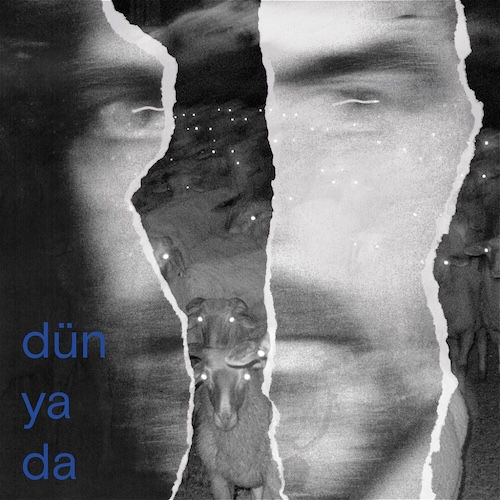
Written and performed by Mehmet Ali Nuroğlu, Dünyada is a solo theatrical performance which ran in London for one week at The Cockpit.
The word Dünyada means “in the world”, and the performance follows the story of a man arriving alone with nothing but a suitcase and a camera.
Over the 70-minute running time, we learn more about his homeland in Turkey, his parents and the loves he has met along the way. It’s an interesting concept which allows the audience to sit with the rawness of his story.
Using his camera and live sound effects, Mehmet projects images and live footage onto the screen behind him — including, for long periods, the audience themselves. Mehmet’s performance is largely built around this camera work. He focuses in on himself, adjusts the camera to zoom closer, and creates special effects on the screen behind him. At one point, he creates multiple copies of himself standing in a row. I also liked the clever use of the camera to zoom in on normal, everyday things and see them in a different way — such as zooming into a beam of light to create the effect of falling snow.
The theatre’s website did mention that the audience would be filmed, and I think in theory this is an interesting idea. However, I’m not entirely sure the implementation was successful. After a while, the constant zooming in on people’s faces became a little uncomfortable and distracted from the stories he was telling. Several audience members became the “inspiration” for the stories being told — from his mum and dad to people he had met throughout his life. While this was clearly intended to create a sense of intimacy, as well as an element of connection and of being seen, I found it increasingly distracting as the evening progressed.
The sound design was also impressive, with Mehmet using a loop station throughout the performance. He would focus on specific words from his story and replay them as a background to his narration. This was an effective technique, but at times it became difficult to concentrate on what he was saying, as his voice was drowned out by the looping words and the story itself became somewhat lost. Perhaps simply reducing the volume of the loops would have allowed his story to come through more clearly.
Similarly, the lighting was very much focused on Mehmet throughout the performance, which was effective in drawing the audience into his story. However, there were periods where continuous flashing lights made it difficult to fully concentrate on what was being said. At times, it felt like a sensory overload, and I struggled to focus on his story for extended periods.
The story itself is an interesting one. He speaks a lot about culture and family, ultimately making the point that, despite our cultural differences, we are all human and share many of the same experiences and emotions. There’s also a lot of dry humour throughout, which helps to break up some of the more intense moments. I did, however, struggle with the overall rhythm.
The premise is that “the narrative unravels into a mosaic of unfinished thoughts and philosophical detours”, but I found it a little too difficult to connect with because of this. We jumped between topics quite frequently and, in some cases, such as when Mehmet spoke about his parents and a lost love, he would move on to another subject before returning to them later. This created a stop-start and repetitive flow which made it harder for me to stay engaged with the narrative.
There’s a lot to like about Dünyada, especially the technical elements. The camera work creates some really inventive moments and there’s an interesting story underneath it all. I was really impressed with the creativity throughout the performance.
The show ends with us sitting together as a group of strangers — but also as a group of humans — watching a video montage on the screen of people arriving at the theatre and getting ready to watch the performance. It was a really effective way to bring the show to a heartwarming conclusion, and the audience seemed to sit with the moment and take it all in.
There’s a lot to like about this show, but ultimately, I struggled to connect with the way it was presented. However, there’s no doubt about Mehmet’s ability to draw in an audience and create an engaging and unique theatrical experience that makes you think about how we see and perceive other people.
Intimate, unique and technically impressive — this show was definitely an interesting watch.